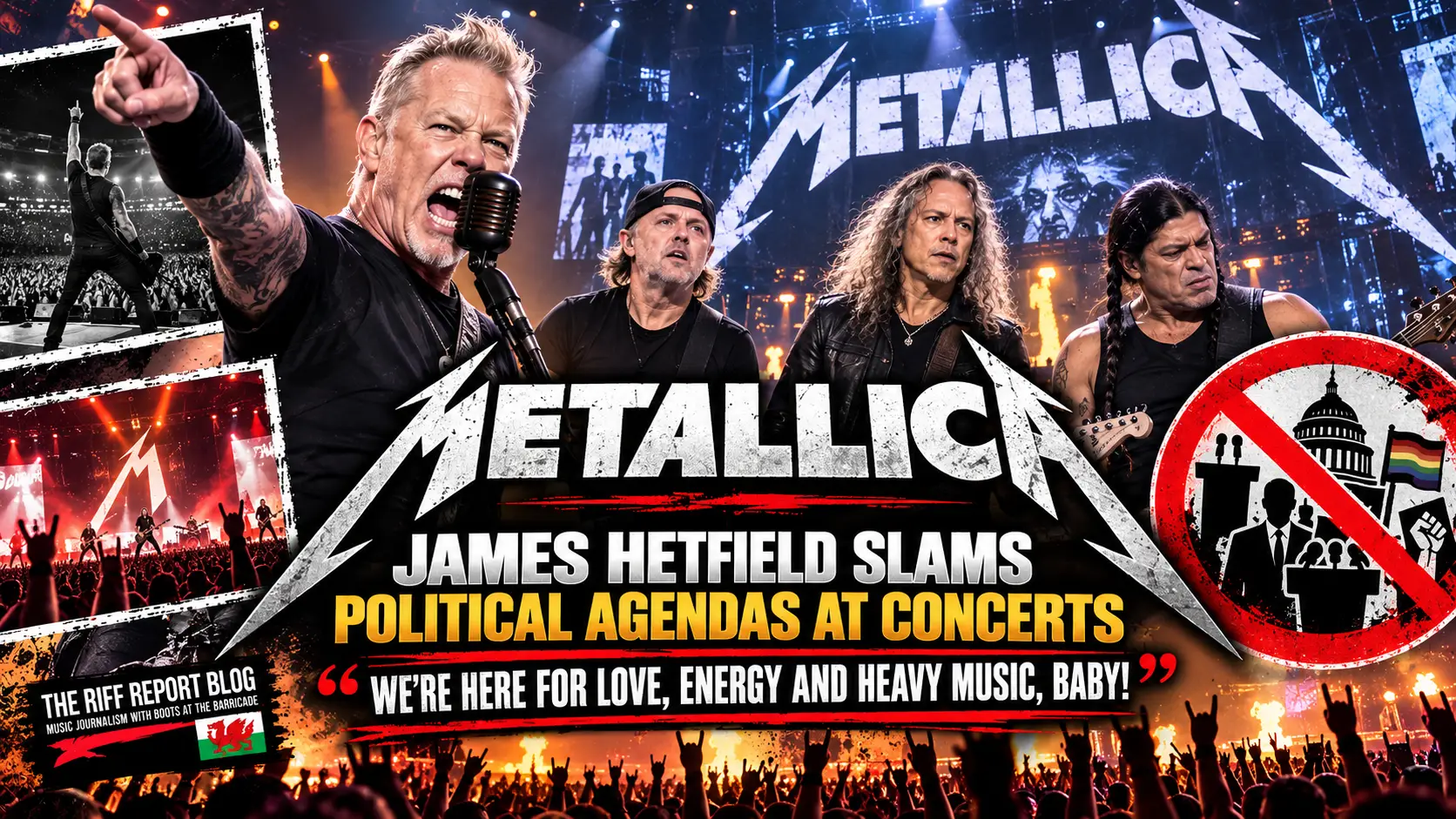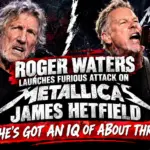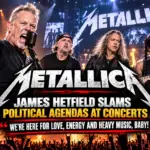
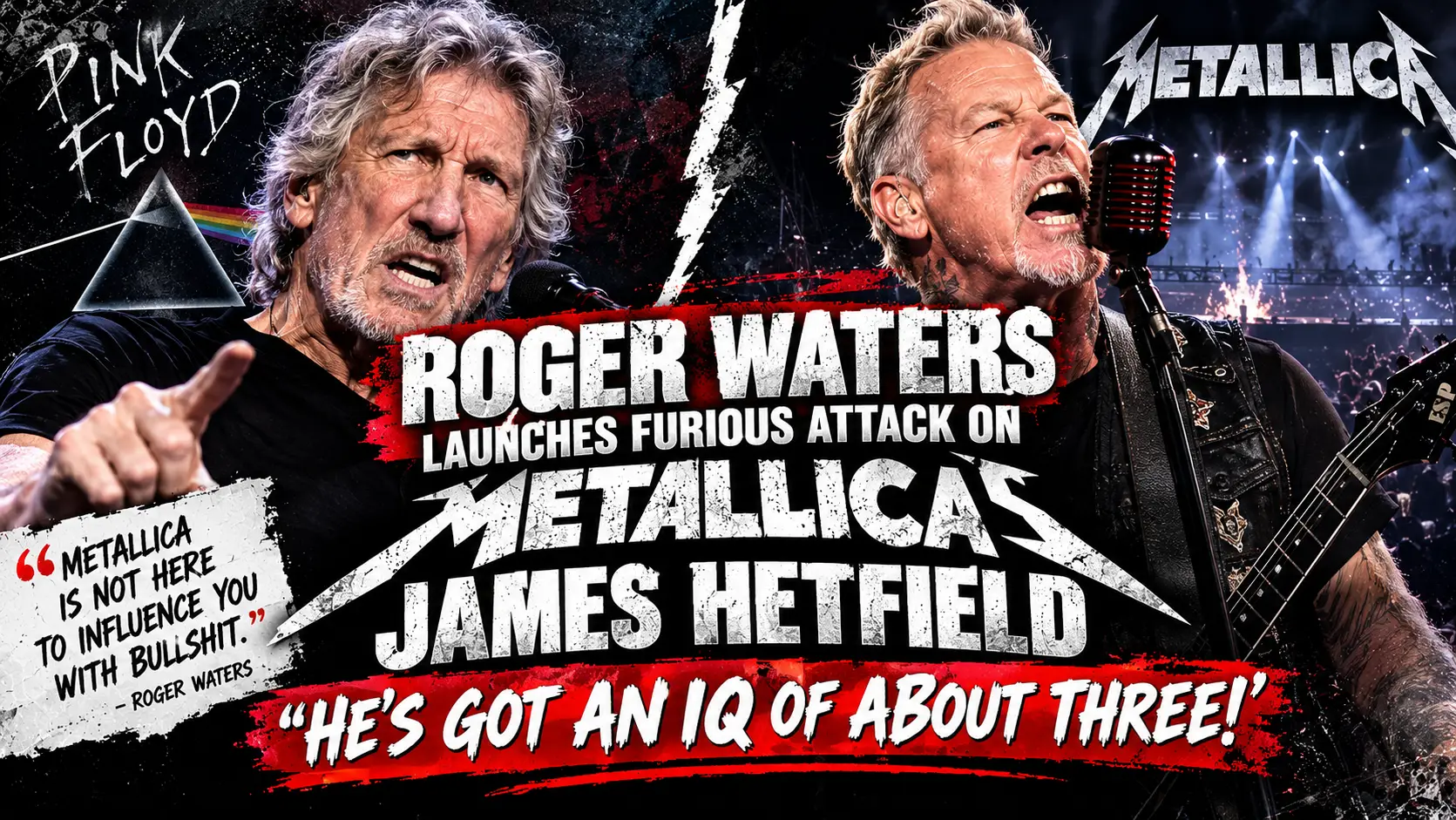
Former PINK FLOYD bassist and vocalist ROGER WATERS has unleashed an extraordinary verbal attack on METALLICA frontman JAMES HETFIELD following his recent comments about politics at concerts. The 83-year-old rock legend branded Hetfield a nobody, questioned his intelligence and even criticised his musical abilities after the METALLICA guitarist insisted that his band’s performances were about music rather than political influence.
The gloves are well and truly off in the world of rock music!
Just days after METALLICA’s James Hetfield sparked controversy with his comments about political statements at live concerts, former PINK FLOYD mastermind Roger Waters has entered the discussion.
And he certainly hasn’t held back.
Speaking during an appearance on The Katie Halper Show, Waters delivered a blistering response to the METALLICA frontman, attacking everything from his intelligence to his ability to play music.
The extraordinary exchange has reignited an increasingly heated debate about the role of politics in rock music.
Should musicians use their platforms to address social and political issues?
Or should concerts provide fans with an opportunity to escape the divisions and pressures of everyday life?
For Hetfield and Waters, the answers appear to be very different.
And with two of rock’s most recognisable personalities now involved, the discussion has attracted considerable attention across the music community.
💥 Roger Waters Calls James Hetfield A Nobody
Waters made his comments during an appearance on American political commentator Katie Halper’s podcast, published on 15 October 2026.
During the conversation, Halper revisited several examples of METALLICA’s politically conscious songwriting and Hetfield’s previous statements about political issues.
The discussion eventually turned to his recent remarks at the Sphere in Las Vegas.
Waters’ reaction was immediate and confrontational.
He called Hetfield a derogatory name, questioned his intelligence and dismissed his importance as a musician.
Among his most striking remarks was the insult:
“He’s got an IQ of about three.”
Waters also described the METALLICA frontman as a nobody, suggesting that his financial success did not make his opinions worth discussing.
The comments represented an unusually personal attack on one of heavy metal’s most influential musicians.
Rather than simply challenging Hetfield’s position on political expression, Waters also questioned his musical credibility.
And that was where his criticism became even more heated.
Louder
+1
🎸 Waters Claims Hetfield Is No Musician
In another unexpected part of the interview, Waters criticised METALLICA’s musical abilities.
The former PINK FLOYD bassist claimed that he had previously heard the band performing on acoustic instruments and had been unimpressed.
His criticism focused on what he regarded as deficiencies in the musicians’ playing.
For METALLICA fans, the comments will undoubtedly be surprising.
James Hetfield has spent more than four decades developing one of the most recognisable rhythm guitar styles in heavy metal.
His combination of precise picking, aggressive riffs and powerful songwriting helped establish the musical foundations of thrash metal.
From the crushing opening of Master Of Puppets to the intricate arrangements of One and Battery, Hetfield’s guitar playing has influenced generations of musicians.
METALLICA have also demonstrated a willingness to explore acoustic arrangements throughout their career.
Their catalogue includes songs such as Fade To Black, Nothing Else Matters, The Unforgiven and Mama Said, which feature acoustic guitar prominently.
The band have additionally performed acoustic charity concerts through their All Within My Hands Foundation.
Waters’ assessment is a personal opinion about their musicianship rather than an established fact.
Nevertheless, his remarks have added another dimension to an already controversial exchange.
🤘 What Did James Hetfield Actually Say?
The dispute began during METALLICA’s performance at the Sphere in Las Vegas on Saturday 10 October 2026.
Taking a break between songs, Hetfield addressed the audience and thanked fans for travelling to the concert.
He acknowledged the time, money and effort involved in attending a major live performance.
The guitarist then explained what he believed METALLICA’s concerts should represent.
Hetfield told the audience:
“Metallica is not here, like some other entertainers, to influence you with their bullshit.”
He explained that the band wanted fans to forget about the pressures of the outside world for a few hours.
Rather than delivering political messages, METALLICA intended to concentrate on providing an entertaining musical experience.
Hetfield summarised his position with the declaration:
“Metallica’s agenda is love, energy and heavy music, baby!”
His comments received an enthusiastic response from the audience but quickly generated debate after footage circulated online.
Importantly, Hetfield did not identify any particular musician or entertainer during his remarks.
Although several artists have been mentioned in subsequent speculation, there is no confirmed evidence that his comments were directed at Roger Waters or any other specific performer.
Louder
+1
⚡ Why Has The Statement Become So Controversial?
The argument arrives during a period of intense discussion about political expression at concerts.
Some musicians believe performing in front of thousands of people gives them an opportunity, and sometimes a responsibility, to address important issues.
Others believe that audiences should be able to enjoy live music without being confronted by political arguments.
Hetfield has generally favoured the second approach.
Waters, meanwhile, has made political commentary a central part of his music and public performances for decades.
That difference goes a long way towards explaining why the METALLICA frontman’s comments attracted such a strong reaction.
However, the situation is more complicated than simply placing one musician on either side of an argument.
METALLICA’s own musical catalogue includes numerous songs addressing war, corruption, injustice and the abuse of power.
That apparent contrast became an important part of the discussion during Waters’ podcast appearance.
💀 METALLICA Have A Long History Of Political And Social Commentary In Their Music
Although Hetfield generally avoids expressing party-political opinions during concerts, METALLICA have never entirely avoided political subjects in their songwriting.
Several of their most influential recordings tackle serious social issues.
🎶 Disposable Heroes – The Horrors Of War
Released on 1986’s Master Of Puppets, Disposable Heroes explores the experiences of soldiers treated as expendable by those in authority.
Its lyrics address military control, dehumanisation and the consequences of warfare.
The song remains one of METALLICA’s most aggressive and musically demanding compositions.
⚖️ …And Justice For All – Corruption And Inequality
The title track from METALLICA’s 1988 album examines the relationship between wealth, power and justice.
Its themes include institutional corruption and the influence of money on systems that are supposed to treat people fairly.
The record’s artwork, featuring a damaged and restrained Lady Justice, reinforces those ideas.
🖤 One – The Human Cost Of Conflict
Also released on …And Justice For All, One tells the story of a soldier left catastrophically injured by war.
Inspired by Dalton Trumbo’s novel Johnny Got His Gun, the song explores suffering, helplessness and the consequences of military conflict.
Its accompanying music video became an important milestone in METALLICA’s career.
🔥 Blackened – Environmental Destruction
Another track from the same album, Blackened presents an apocalyptic vision of environmental devastation.
The song explores humanity’s capacity to destroy its surroundings and the consequences that could follow.
These recordings demonstrate that METALLICA have addressed political and social themes through their music for decades.
However, there is a distinction between writing songs about difficult subjects and using a concert to endorse a particular political position.
Hetfield’s comments suggest that he considers those approaches to be different.
Waters’ criticism raises the question of whether musicians can meaningfully separate their artistic messages from their public responsibilities.
🎤 Roger Waters – A Career Built Around Music And Political Expression
For Roger Waters, political commentary has been deeply connected to his artistic identity.
As a founding member and principal creative force behind some of PINK FLOYD’s most influential recordings, Waters helped create music exploring authority, war, inequality, isolation and the darker aspects of modern society.
Albums including The Dark Side Of The Moon, Wish You Were Here, Animals, The Wall and The Final Cut contain social and political themes.
His 1977 album Animals drew inspiration from George Orwell’s political allegory Animal Farm, using animal imagery to examine social hierarchy and power.
Meanwhile, The Wall explored isolation, authoritarianism, trauma and the relationship between individuals and society.
Songs such as Another Brick In The Wall (Part 2) and Mother became internationally recognised recordings.
Throughout his subsequent solo career, Waters continued addressing political subjects in both his music and live productions.
His concerts have featured extensive visual imagery, political messages and commentary on international conflicts.
His outspoken approach has also generated controversy, with critics challenging some of his statements and supporters defending his willingness to engage with contentious issues.
Waters has consistently maintained that political expression is an important part of his work.
That philosophy stands in contrast to Hetfield’s stated preference for allowing METALLICA concerts to provide an escape from external disagreements.
🇵🇸 The Macklemore Controversy Adds Another Dimension
The disagreement has also emerged against the background of another major music industry controversy.
In September 2026, American rapper MACKLEMORE was removed from the remaining dates of ED SHEERAN’s North American tour following statements supporting Palestinians.
During a performance at MetLife Stadium in New Jersey on 4 September, Macklemore expressed solidarity with people affected by the conflict in Gaza and the West Bank.
His remarks attracted criticism from some organisations and venue operators.
Subsequently, promoters confirmed that he would no longer appear on the remaining dates.
Sheeran explained that the decision had been made by the tour promoter following objections from venue owners, rather than being his personal decision.
The situation generated widespread discussion about artistic freedom, political expression and the influence of concert promoters and venue operators.
Waters was among those who criticised the decision to remove Macklemore.
His position reflects his longstanding support for Palestinian rights and his belief that musicians should be able to address humanitarian issues publicly.
Hetfield’s comments at the Sphere came several weeks after the controversy.
However, because he did not name Macklemore, Sheeran or any other musician, it remains unconfirmed whether that incident influenced his remarks.
Investing.com
+1
🖤 Waters Also Previously Criticised Ozzy Osbourne
This is not the first time Roger Waters has attracted attention for comments about a major heavy metal musician.
Following the death of BLACK SABBATH frontman OZZY OSBOURNE in July 2025, Waters made dismissive remarks about the late singer and his musical legacy.
His comments attracted a furious response from members of the Osbourne family.
Ozzy’s son Jack publicly criticised Waters, while the family also responded through merchandise mocking the former PINK FLOYD musician.
Waters subsequently defended his position during an interview with Piers Morgan in January 2026.
The dispute demonstrated how strongly personal opinions about music can resonate when they involve widely respected figures.
His latest comments about Hetfield have once again placed him at the centre of a discussion involving some of rock’s most recognisable personalities.
🎸 James Hetfield Has Avoided Political Endorsements For Years
Although Hetfield’s latest comments have attracted significant attention, his reluctance to discuss politics publicly is not a recent development.
In a 2017 interview with Chilean newspaper La Tercera, the METALLICA frontman explained that he preferred to keep his political opinions private.
He argued that music could bring together people who might otherwise disagree about politics or religion.
For Hetfield, preserving that connection was more important than revealing his personal political preferences.
That philosophy has remained a recurring theme in his public comments.
His position does not necessarily mean he lacks political opinions.
Rather, he has generally chosen not to make those opinions a central part of METALLICA’s live performances.
It is also worth remembering that different members of METALLICA have expressed different attitudes towards political discussion.
Drummer Lars Ulrich, for example, has occasionally spoken more openly about political issues.
The band’s public approach therefore cannot always be reduced to the personal views of a single musician.
🔥 Music, Politics And The Freedom To Disagree
The disagreement between Waters and Hetfield highlights a question that has existed throughout rock music’s history.
Should musicians concentrate primarily on entertaining audiences, or should they use their public influence to address important issues?
There is no single approach followed by every artist.
Bands such as RAGE AGAINST THE MACHINE have made political commentary an essential part of their musical identity.
Other artists prefer to keep their performances focused on entertainment.
Some move between both approaches, addressing serious subjects in their lyrics while avoiding lengthy political statements on stage.
Audiences also have different expectations.
Some attend concerts specifically because they identify with an artist’s political messages.
Others simply want to enjoy their favourite songs without discussing contemporary events.
The freedom of musicians to express political beliefs is an important part of artistic expression.
Equally, musicians can choose not to make political statements during their performances.
Those decisions are not necessarily incompatible with creating meaningful or socially conscious music.
The Waters-Hetfield disagreement illustrates how differently established musicians can interpret their relationship with audiences.
🤘 METALLICA Have Yet To Respond To Waters’ Attack
Despite the personal nature of Waters’ comments, METALLICA have not publicly issued a response to the criticism as of 17 October 2026.
The band remain focused on their Life Burns Faster residency at the Sphere in Las Vegas.
The spectacular run began on 1 October and is scheduled to continue until March 2027.
Featuring the band’s No Repeat Weekend format, the residency allows audiences to experience two entirely different setlists across paired concerts.
The production makes extensive use of the Sphere’s enormous wraparound display and immersive audio technology.
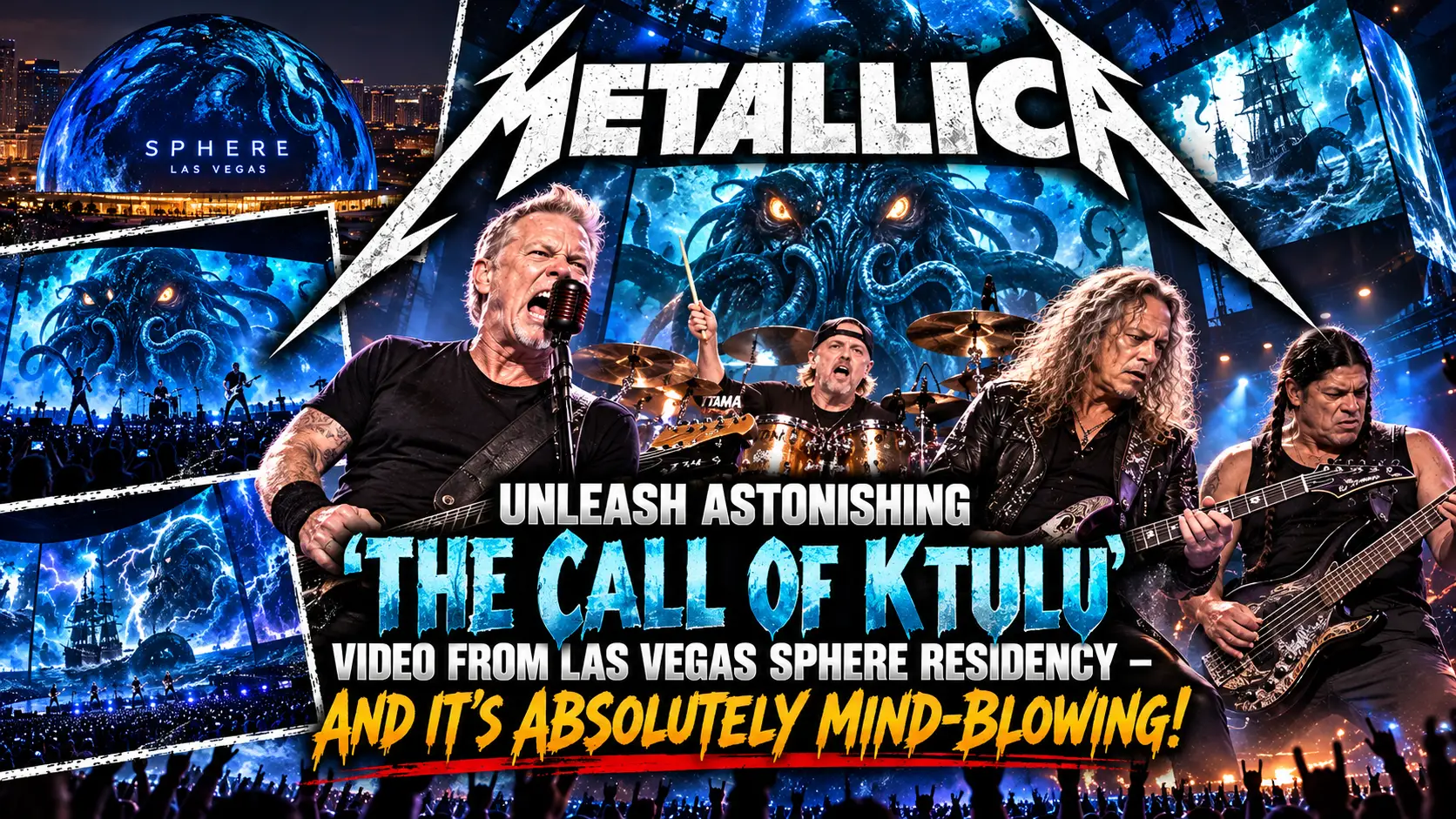
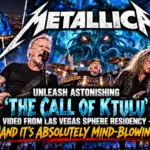
METALLICA have also begun releasing professionally filmed footage from the performances, including spectacular interpretations of The Call Of Ktulu and …And Justice For All.
The latter song is particularly relevant to the current controversy because of its themes of power, corruption and institutional injustice.
For now, neither Hetfield nor his bandmates have indicated whether they intend to address Waters’ remarks.
🤘 THE RIFF REPORT – TWO ROCK LEGENDS, TWO VERY DIFFERENT APPROACHES
The disagreement between Roger Waters and James Hetfield has become one of the most talked-about rock music controversies of October 2026.
Both musicians have helped create influential recordings that explore serious issues.
Waters played a central role in PINK FLOYD’s ambitious conceptual albums, frequently using music to question political power, authoritarianism and conflict.
Hetfield helped establish METALLICA as one of the defining bands of thrash metal, contributing to songs that examine war, injustice and the consequences of violence.
Their disagreement concerns something beyond musical style.
It is about how artists believe their public platforms should be used.
Waters regards political engagement as closely connected to artistic responsibility.
Hetfield believes METALLICA concerts should provide an experience centred on shared musical enjoyment rather than political persuasion.
Both positions have supporters and critics.
What remains unclear is whether this disagreement will develop into a longer-running public exchange or end with Waters’ podcast comments.
So far, METALLICA have chosen not to respond.
And while the debate continues, the music created by both artists remains part of rock history.
Two legendary musicians. Two very different philosophies. One enormous argument about the role of politics in rock ‘n’ roll.
The question now is whether James Hetfield will respond – or simply turn up the amplifiers and let METALLICA’s music do the talking. 🤘🔥
Stay tuned to The Riff Report Blog for further developments and the latest news from across the world of rock and heavy metal.