Right, butt. This one’s got the underground absolutely seething.
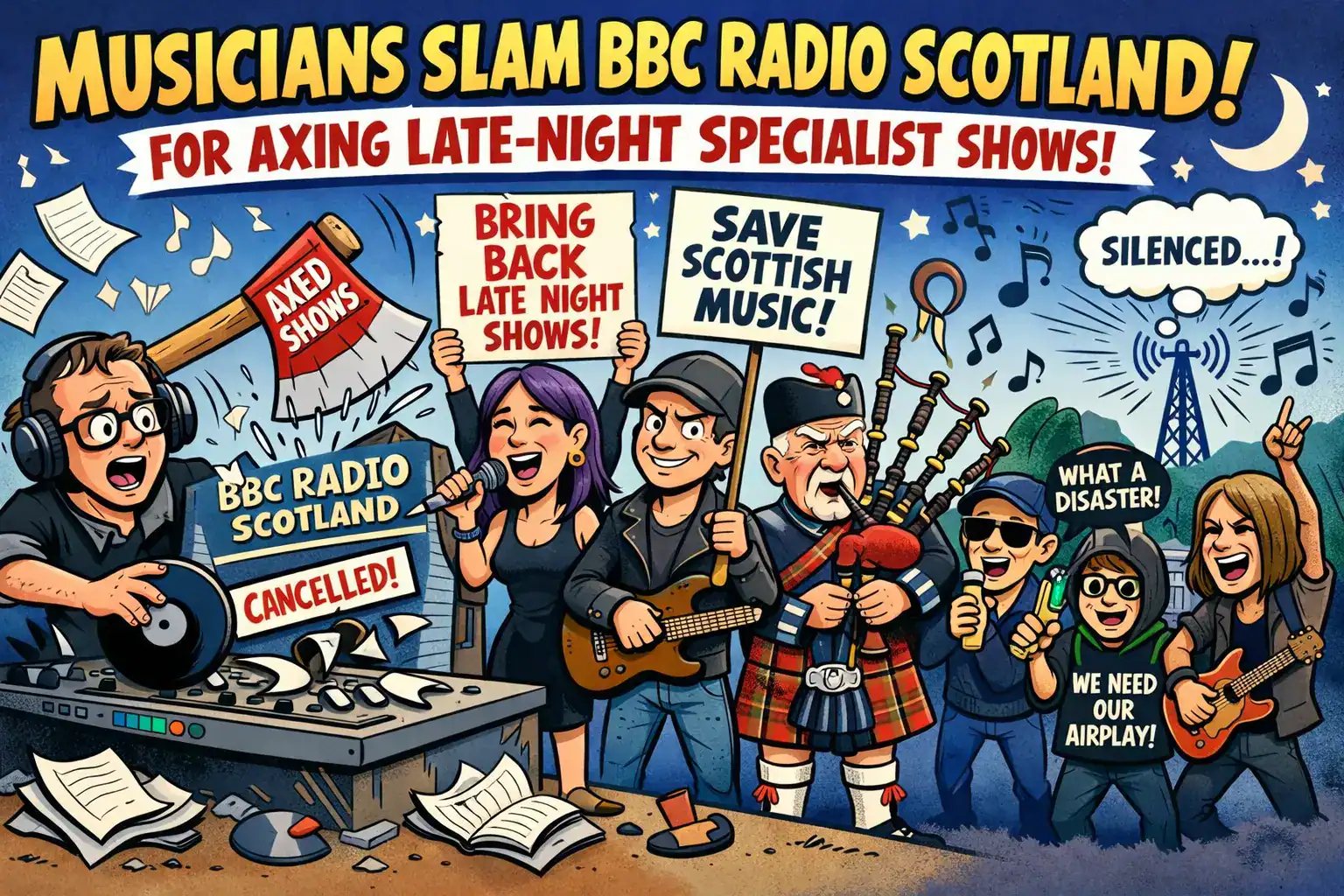
BBC Radio Scotland has confirmed it’s pulling the plug on several specialist late-night music shows and the reaction from musicians has been loud, angry, and completely justified. These weren’t throwaway slots. These weren’t “stick it on while you fall asleep” vibes. These were the sacred hours. The proper weird o’clock. The place where scenes were born and bands first felt heard. 🌙🔥
Now? Gone. Axed. Off the schedule like they never mattered.
And the music community is not taking it quietly.
🔥 “THIS IS WHERE SCENES START, MUN”
Artists, promoters, DJs and fans have been piling in, calling the decision a massive blow to Scotland’s grassroots music culture. Late-night specialist shows have always been the lifeblood for unsigned artists, niche genres and communities that don’t fit neatly into daytime playlists built for maximum blandness.
These shows championed:
- 🎶 New and unsigned artists
- 🏴 Scotland’s regional and underground scenes
- 🎧 Genres that don’t get daytime airtime
- 🌱 Musical risk, discovery and passion
One musician put it perfectly, calling the cuts “a slow suffocation of creative spaces”. And honestly? That’s bang on.
📻 WHY LATE-NIGHT RADIO MATTERS
Late-night radio has always been different. No algorithms. No corporate playlist meetings. Just humans curating music because they love it.
It’s where:
- Bands hear themselves on the radio for the first time
- Listeners discover something that changes their whole taste
- Scenes connect across cities and communities
- Presenters actually care about what they’re playing
Strip that away and what’s left? Safe radio. Predictable radio. Radio that sounds the same at 2am as it does at 2pm. Flat as yesterday’s cola.
📰 THE BACKLASH GOES NATIONAL
The outrage has spilled beyond social media, landing in national press as musicians openly criticise the BBC for gutting specialist programming while still claiming to support culture.
The official line? “Streamlining” and “audience reach”.
But here’s the thing, mun.
Late-night specialist shows were never about chasing numbers. They were about serving communities. Public service broadcasting isn’t supposed to be beige. It’s supposed to take risks.
🤘 THE RIFF REPORT SAYS THIS
This feels like another worrying step in a long trend where grassroots music gets quietly shoved out the back door while no one upstairs notices.
Publicly funded radio should be a platform for discovery, not just a jukebox of safe bets. When you remove spaces for niche sounds, you don’t modernise radio. You hollow it out.
And when musicians start feeling ignored by the BBC, don’t be shocked when they stop engaging with it altogether.
We’ll keep shouting about it.
We’ll keep backing specialist shows wherever they survive.
And we’ll always stand with the underground. 🖤🔥
What do you reckon, butt?
Are late-night shows essential… or are they being sacrificed to the algorithm gods? Drop your thoughts and let’s make some noise. 🤘