There are moments in rock history that feel planned. Stadium finales. Farewell tours. Confetti cannons and emotional speeches.
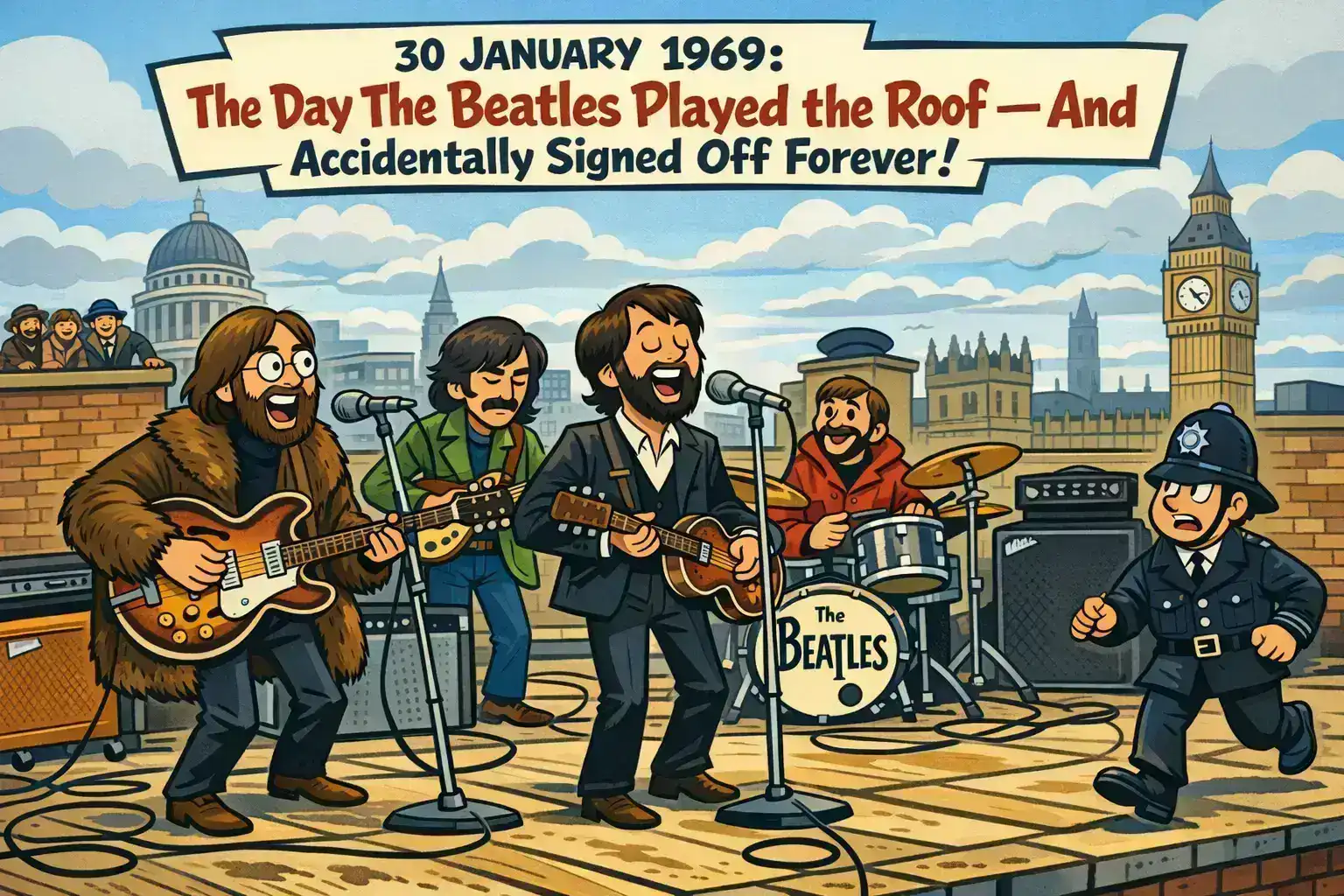
And then there’s 30 January 1969 — a freezing London lunchtime where four blokes climbed onto a roof, plugged in, and unknowingly played their final live show.
No one on Savile Row clocked it at the time. Office workers didn’t down tools thinking “this is history”. The police certainly didn’t realise they were about to interrupt the end of an era. And even the band themselves probably thought it was just another mad idea to get through a tense week.
But that’s the thing with The Beatles — the most important moments often arrive disguised as chaos.
No Tickets, No Stage, No Goodbye — Just Rock ’n’ Roll
This wasn’t a comeback gig. It wasn’t a farewell. It wasn’t even properly advertised.
After nearly three years without playing live, the band were deep in the frustrating, frost-bitten Let It Be sessions. Spirits were low, tempers were short, and the magic everyone talked about felt like it might’ve packed its bags.
So instead of a stadium or TV studio, someone muttered the most Beatle-y sentence imaginable:
“What if we just play… up there?”
Up there turned out to be the roof of Apple Corps HQ on Savile Row — about as far removed from the Cavern Club as you could get, but somehow perfectly on brand.
Amps went up. Cameras rolled. London carried on completely unaware.
Lunchtime In London, End Of An Era On The Roof
Just after midday, the sound of guitars started raining down onto the street.
People stopped. Necks craned. Secretaries leaned out of windows. Taxi drivers killed engines. Confusion turned into excitement as it dawned on everyone below that this wasn’t just a band — it was The Beatles, casually turning a workday into a once-in-a-lifetime moment.
They tore through:
- Get Back
- Don’t Let Me Down
- I’ve Got a Feeling
- One After 909
No frills. No theatrics. Just raw, joyful noise echoing through one of London’s most buttoned-up streets. The contrast was glorious — rock ’n’ roll gatecrashing the lunch hour like a drunk mate who refuses to whisper. 🤘
“You’ve Been Playing On The Roof…”
Eventually, the inevitable happened.
The police arrived. Not with batons swinging — more confused than furious — politely asking about the noise complaints from neighbouring businesses. History being shut down one request at a time. 🚓😅
Up on the roof, the band kept playing, half-amused, half-aware that the clock was ticking. John Lennon, ever the mischief-maker, soaked it in.
When it finally wrapped, there was no grand speech. No emotional send-off. Just Lennon’s immortal line:
“I’d like to say thank you on behalf of the group and ourselves, and I hope we’ve passed the audition.”
And that was that.
No encore.
No farewell tour.
No idea it was the last time they’d ever play live together.
Why The Rooftop Gig Still Hits So Hard
What makes this moment sting — in the best possible way — is its accidental poetry.
The greatest band in the world didn’t bow out under spotlights or fireworks. They ended it how they started: playing for the love of it, slightly scruffy, slightly rebellious, and absolutely unmistakable.
No one on Savile Row realised it was the end.
No one on the street realised they were witnessing the final chapter.
And that’s why it still feels so powerful today.
Rock history doesn’t always announce itself.
Sometimes it just plugs in, plays loud, and disappears into legend.
And fair play — if you’re going to sign off, doing it from a rooftop in the middle of London on a freezing January day is pretty bloody rock ’n’ roll, mun. 🔥🎸
Riff Report Verdict:
The rooftop gig isn’t just a Beatles moment — it’s the reminder that the best things in music are often messy, unplanned, and gone before you realise how special they were.
Now excuse us while we crank Get Back and stare dramatically into the distance like absolute melts. 🤘