
Every now and then you come across an organisation that reminds you exactly why the live music scene is such a special place. Not just the riffs, the noise, and the sweaty gig rooms — but the people, the community, and the idea that music should be for everyone.
That’s exactly what Gig Buddies is all about.
Before we dive into the conversation, we want to start by saying a massive thank you to Luke from Gig Buddies for taking the time to chat with us here at The Riff Report. Taking time out of a busy schedule to talk about the project, the people involved, and the incredible work being done to help more people experience live music is hugely appreciated.
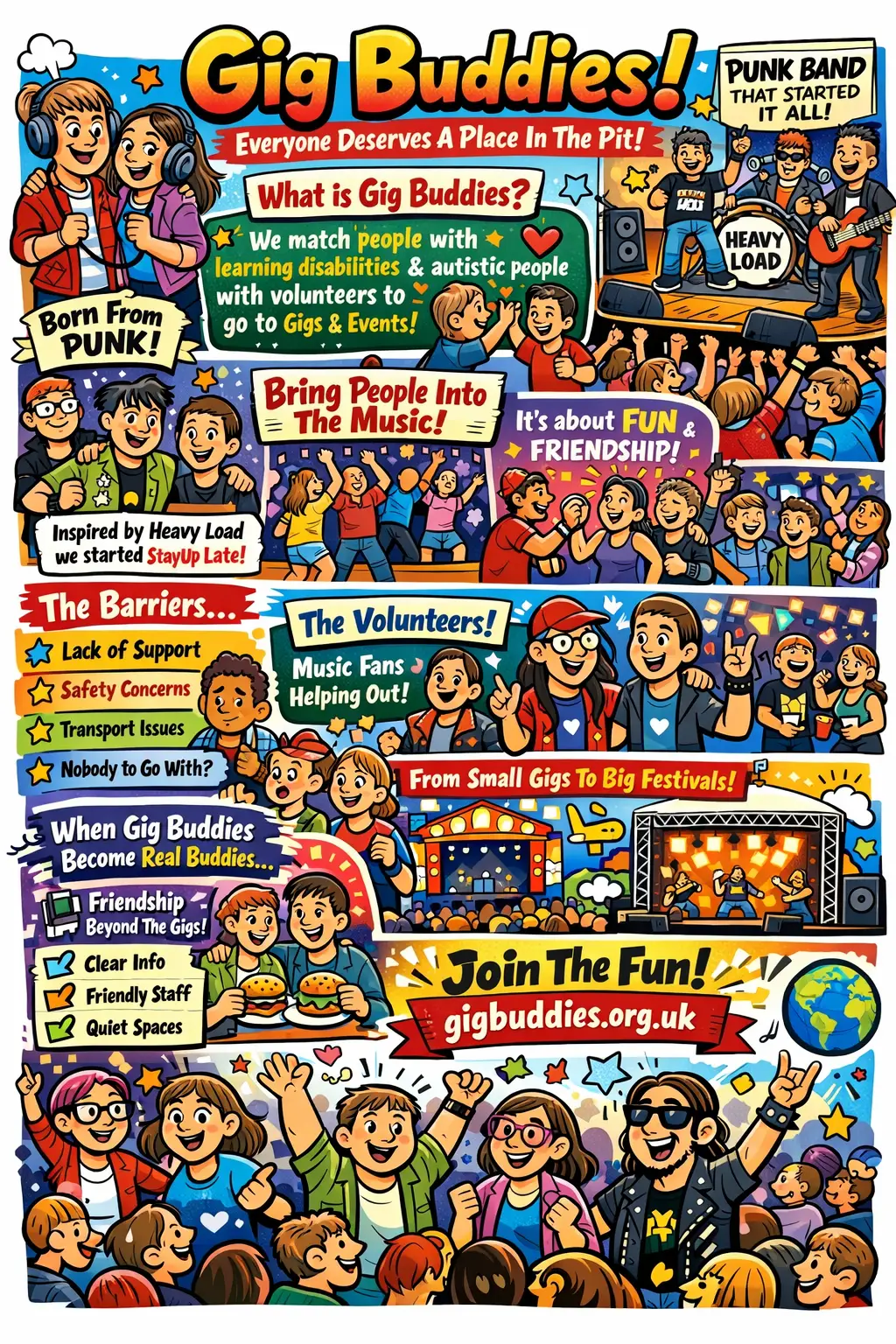
Gig Buddies is a project run by the charity Stay Up Late, and its mission is beautifully simple — helping people with learning disabilities and autistic people enjoy the same freedom many of us take for granted: going out to gigs, festivals, and events with mates who share the same interests.
Because let’s be honest for a second.
Live music isn’t just about the band on stage.
It’s about the crowd chants, the shared moments, the strangers who become friends in the queue for the bar, and the feeling of being part of something loud, messy, and brilliant. And Gig Buddies exists to make sure more people get to experience exactly that.
So grab a drink, turn the volume up a notch, and let’s get into our conversation with Luke about how Gig Buddies started, why it matters, and how music can bring people together in ways nothing else quite can. 🤘
1. For anyone discovering Gig Buddies for the first time through The Riff Report — what exactly is Gig Buddies, and how did the whole idea first come to life?
Gig Buddies is a project run by the charity Stay Up Late. We match people with learning disabilities and/or autistic people with a volunteer who shares similar interests, so they can go out together to mainstream gigs other social events
The idea came from the punk band Heavy Load. Back in 2006 they noticed that lots of their fans with learning disabilities had to leave their gigs early because their support workers’ shifts were ending. Everyone else was staying out, enjoying the music and the night, but they had to go home.
That felt pretty unfair, so the band set up Stay Up Late. We believe all adults should have the same freedom to go out, have fun, and stay up late if they want to.
2. Live music is all about connection — sweaty crowds, loud riffs, strangers becoming mates in the pit. How does Gig Buddies help people experience that magic who might otherwise miss out?
Live music is one of those spaces where people connect really easily, but not everyone gets the chance to be part of it.
Gig Buddies is all about community. Instead of relying only on paid support, we connect people with someone in their community who shares their interests.
Because buddies genuinely like the same stuff, they’re not just “going to an activity”, they’re going out together because they both want to be there. That shared interest makes a huge difference. It turns going to a gig into something social and fun, rather than something that has to be organised around care rotas.
3. Every gig has its unforgettable moments. Do you have a favourite Gig Buddies story where a night of live music turned into something really special?
There are loads, but one that sticks out is when a big group of Gig Buddies went to a club night for the Brighton Fringe in 2024. We all stayed on the dancefloor until the early hours of the morning and had such an incredible time. Everyone was getting along so well and making new friends with others on the night out.
Those are the moments you realise it’s not just about the music. It’s about confidence, independence and feeling like you’re part of something.
4. The UK music scene can be chaotic at the best of times — crowds, queues, beer flying everywhere. What challenges do people with learning disabilities face when trying to go to gigs, and how does Gig Buddies help break down those barriers?
For a lot of people, the biggest issue isn’t always just inaccessible venues, it might be having someone to go with, or many other barriers. We asked a group of Gig Buddy participants what these barriers are for them, and this is what they said,
- Lack of the right support
- Community safety
- Worries over safety
- Transport issues
- Low confidence
- Lack of motivation
- Nobody to go with
- Not knowing what’s on
Many people with learning disabilities rely on support services, and those services often run on strict schedules and budgets. That can make spontaneous nights out, late gigs or festivals really difficult.
Gig Buddies helps by pairing people with volunteers who want to go to the same things anyway. It means someone has a friend to go with, someone to share the experience with, and someone who can help navigate things like busy crowds, travel, or the general chaos that comes with live music.
5. Let’s talk about the volunteers. What kind of people become Gig Buddies, and what usually inspires them to get involved?
Gig Buddies volunteers come from all sorts of backgrounds, but the one thing they all have in common is that they love going out and doing things.
A lot of them are music fans who already go to gigs regularly and like the idea of sharing that experience with someone else. Others get involved because they want to meet new people or be part of something positive in their community.
People often tell us they sign up thinking they’re volunteering, but what they actually get is a new friendship and a lot of great nights out.
6. From tiny grassroots venues to massive festivals — where have Gig Buddies members ended up rocking out together?
Everywhere really. Some buddies love small grassroots venues and local gigs, while others have gone to big festivals and arena shows.
We’ve had groups heading to festivals, late-night club nights, comedy shows, theatre and everything in between. It really depends on what the pair are into.
That’s the beauty of the project; it’s led by people’s interests rather than a fixed programme.
7. Music has the power to bring people together in ways nothing else can. Have you seen friendships form through Gig Buddies that went far beyond the gig itself?
Definitely. The aim is always friendship, not just attending events.
Lots of buddies start off meeting for gigs and then end up doing all sorts of other things together like grabbing food before a show, going to the cinema, watching football, or just hanging out.
Some matches have been going for 10+ years now, which is amazing to see. What starts as “let’s go to a gig together” often turns into a really meaningful long-term friendship.
8. If a venue owner, festival organiser, or band is reading this right now — what can they do to help make gigs more accessible and welcoming for everyone?
Small changes can make a huge difference.
Clear information about accessibility, welcoming staff that are disability awareness trained, and being open to conversations about people’s needs all help. Things like quiet spaces, flexible entry policies, and making sure accessibility information is easy to find online can remove a lot of uncertainty for people before they even arrive.
9. What’s been the biggest “YES! This is working!” moment for the Gig Buddies team since the organisation started?
One of the biggest moments has been seeing Gig Buddies spread to different places and communities.
What started as an idea from a band noticing something unfair at their gigs has now grown into projects across the UK and internationally. Seeing people forming friendships, going out together and feeling part of their local music scene really shows that the idea works.
There are now 20 Gig Buddies in projects across the globe and more to come!
10. Finally — if someone reading this thinks, “That sounds brilliant, I want to help,” how can they become a Gig Buddy or support the project?
The best way to support Gig Buddies is to get involved.
If you love music and enjoy going to gigs, you can sign up to become a volunteer at your local Gig Buddies project (gigbuddies.org.uk/gig-buddies-locations). You’ll be matched with someone who shares your interests, and you simply go out together once a month or so.
Venues, bands and promoters can also support the project by helping spread the word, collaborating on events, or thinking about accessibility when planning shows.
At the end of the day, Gig Buddies is all about community and the more people who get involved, the better nights out everyone has.
All info about the project can be found at gigbuddies.org.uk